Camilla Pena
 Trimming a cat’s claws is an essential aspect of cat grooming and maintenance. Regular nail trimming helps to keep your cat’s claws at a healthy length, preventing them from becoming overgrown and causing discomfort or injury. Overgrown claws can also lead to mobility issues and difficulty walking for your cat.
Trimming your cat’s claws also helps to protect your furniture and other belongings from scratches. Cats naturally scratch to shed the outer layer of their claws and mark their territory. Providing your cat with a scratching post or pad can help to redirect this behavior away from your furniture, but regular nail trimming will also help to minimize scratching damage.
If you are not comfortable trimming your cat’s claws yourself, you can take your cat to a veterinarian or professional groomer to have their claws trimmed. However, with a little patience and practice, you can easily trim your cat’s claws at home.
How to Trim Cat Claws
Trimming your cat’s claws is an essential part of cat grooming and maintenance. Here are six key aspects to consider when trimming your cat’s claws:
- Frequency: Trim your cat’s claws every 1-2 weeks, or as needed.
- Tools: Use sharp, cat-specific nail clippers.
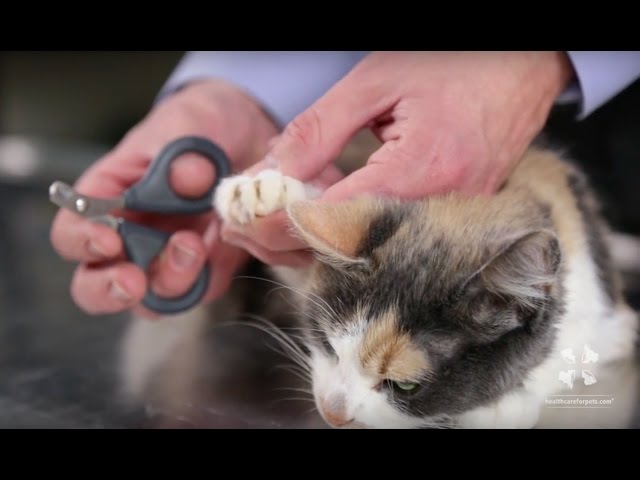
- Hold: Hold your cat securely, but gently, and restrain their paw.
- Cut: Cut only the white tip of the nail, avoiding the pink “quick” which contains nerves and blood vessels.
- File: File any sharp edges after trimming.
- Rewards: Reward your cat with treats or praise after trimming their claws to make the experience positive.
Trimming your cat’s claws regularly will help to keep your cat healthy and comfortable, and protect your furniture from scratches. If you are not comfortable trimming your cat’s claws yourself, you can take your cat to a veterinarian or professional groomer to have their claws trimmed.
Frequency
The frequency with which you trim your cat’s claws depends on a number of factors, including the cat’s age, activity level, and environment. Kittens and older cats may need their claws trimmed more frequently than adult cats, and cats that spend a lot of time outdoors may need their claws trimmed less frequently than indoor cats.
If you are unsure how often to trim your cat’s claws, it is best to err on the side of caution and trim them more frequently. Overgrown claws can cause a number of problems for cats, including pain, discomfort, and difficulty walking. In severe cases, overgrown claws can even lead to lameness.
Trimming your cat’s claws regularly is an important part of cat grooming and maintenance. By following the tips above, you can help to keep your cat’s claws healthy and trim, and prevent a number of potential problems.
Tools
When trimming your cat’s claws, it is important to use sharp, cat-specific nail clippers. Human nail clippers are not designed for cat claws and can crush or split the nail, causing pain and discomfort for your cat. Cat-specific nail clippers are designed to make a clean cut, which is less likely to cause pain or injury.
- Sharpness: Sharp nail clippers will make a clean cut, which is less likely to cause pain or injury to your cat. Dull nail clippers can crush or split the nail, which can be painful and may lead to infection.
- Size: Cat-specific nail clippers are smaller than human nail clippers, which makes them easier to use on a cat’s smaller claws.
- Shape: Cat-specific nail clippers have a curved blade that is designed to fit the shape of a cat’s. This helps to ensure a clean cut and prevents the nail from splitting.
- Safety features: Some cat-specific nail clippers have safety features, such as a guard that prevents you from cutting the nail too short.
Using sharp, cat-specific nail clippers is an important part of trimming your cat’s claws safely and effectively. By following these tips, you can help to keep your cat’s nails healthy and trim, and prevent a number of potential problems.
Hold
Holding your cat securely, but gently, and restraining their paw is an essential part of trimming their claws safely and effectively. A cat’s claws are very sharp, and if they are not properly restrained, they can easily scratch you or themselves. Additionally, if the cat’s paw is not properly restrained, it can be difficult to get a good grip on the nail and make a clean cut.
There are a few different ways to hold a cat for nail trimming. One common method is to wrap the cat in a towel, leaving only their head and one paw exposed. This method can be helpful for cats that are particularly squirmy or uncooperative. Another method is to simply hold the cat in your lap, with one hand supporting their body and the other hand restraining their paw. This method can be more difficult for cats that are larger or more active, but it can be more comfortable for the cat.
Regardless of which method you choose, it is important to be gentle and patient when trimming your cat’s claws. Cats can be easily startled or frightened, so it is important to approach them calmly and quietly. It is also important to avoid pulling or jerking on their paw, as this can cause pain or injury.
By following these tips, you can help to make nail trimming a safe and positive experience for your cat.
Cut
When trimming your cat’s claws, it is important to avoid cutting the pink “quick” which contains nerves and blood vessels. Cutting the quick can be painful for your cat and may cause bleeding.
- Identify the quick: The quick is the pink, fleshy part of the nail that contains nerves and blood vessels. It is important to be able to identify the quick before you start trimming your cat’s claws.
- Cut only the white tip: When trimming your cat’s claws, only cut the white tip of the nail. Avoid cutting into the pink quick.
- Use sharp clippers: Sharp clippers will make a clean cut and help to avoid cutting into the quick.
- Be careful: If you are not sure how to trim your cat’s claws, it is best to take them to a veterinarian or professional groomer.
By following these tips, you can help to make nail trimming a safe and positive experience for your cat.
File: File any sharp edges after trimming.
Filing any sharp edges after trimming is an important step in the process of how to trim cat claws. Sharp edges can be uncomfortable for your cat and can also lead to snags and tears in their skin or furniture. Filing the nails smooths out any rough edges and helps to prevent these problems.
To file your cat’s nails, you will need a fine-grit nail file. Gently file the edges of each nail in a downward motion, taking care not to file too much. You just want to smooth out any sharp edges, not shorten the nails.
Filing your cat’s nails regularly is an important part of cat grooming and maintenance. By following these tips, you can help to keep your cat’s claws healthy and trim, and prevent a number of potential problems.
Rewards
Rewarding your cat with treats or praise after trimming their claws is an important part of making the experience positive for them. Cats are creatures of habit, and they will quickly learn to associate nail trimming with something they enjoy. This will make them more cooperative and less likely to resist the process in the future.
- Positive reinforcement: Rewarding your cat with treats or praise after trimming their claws is a form of positive reinforcement. Positive reinforcement is a training technique that rewards desired behaviors, making them more likely to be repeated in the future.
- Building trust: Rewarding your cat after trimming their claws also helps to build trust between you and your cat. Cats are independent creatures, and they need to feel that they can trust you before they will allow you to do something that they may find uncomfortable, such as trimming their claws.
- Creating a positive association: Rewarding your cat after trimming their claws helps to create a positive association between nail trimming and something they enjoy. This will make them more likely to cooperate with the process in the future, and it will also make it less stressful for both you and your cat.
- Making it a fun experience: Trimming your cat’s claws should be a fun and positive experience for both of you. By rewarding your cat after trimming their claws, you can help to make the process more enjoyable for them and less stressful for you.
Rewarding your cat with treats or praise after trimming their claws is an important part of making the experience positive for them. By following these tips, you can help to make nail trimming a safe and positive experience for your cat.
FAQs About How to Trim Cat Claws
Trimming your cat’s claws is an essential part of cat grooming and maintenance. It helps to keep your cat’s claws healthy and trim, and prevents a number of potential problems. However, many cat owners have questions about how to trim their cat’s claws safely and effectively. Here are the answers to some of the most frequently asked questions about how to trim cat claws:
Question 1: How often should I trim my cat’s claws?
Answer: You should trim your cat’s claws every 1-2 weeks, or as needed.
Question 2: What tools do I need to trim my cat’s claws?
Answer: You will need a pair of sharp, cat-specific nail clippers.
Question 3: How do I hold my cat for nail trimming?
Answer: You can wrap your cat in a towel, leaving only their head and one paw exposed, or simply hold them in your lap with one hand supporting their body.
Question 4: How do I cut my cat’s claws?
Answer: Only cut the white tip of the nail, avoiding the pink quick which contains nerves and blood vessels.
Question 5: Do I need to file my cat’s nails after trimming them?
Answer: Yes, you should file any sharp edges after trimming your cat’s claws.
Question 6: How do I make nail trimming a positive experience for my cat?
Answer: Reward your cat with treats or praise after trimming their claws.
By following these tips, you can help to make nail trimming a safe and positive experience for your cat.
If you are still unsure about how to trim your cat’s claws, you can take them to a veterinarian or professional groomer to have their claws trimmed.
Tips on How to Trim Cat Claws
Trimming your cat’s claws is an essential part of cat grooming and maintenance. It helps to keep your cat’s claws healthy and trim, and prevents a number of potential problems. Here are a few tips on how to trim your cat’s claws:
Tip 1: Use the right tools.
The best tool to use for trimming your cat’s claws is a pair of sharp, cat-specific nail clippers. Human nail clippers are not designed for cat claws and can crush or split the nail, causing pain and discomfort for your cat.
Tip 2: Hold your cat securely.
It is important to hold your cat securely while trimming their claws. One way to do this is to wrap your cat in a towel, leaving only their head and one paw exposed. You can also simply hold your cat in your lap, with one hand supporting their body and the other hand restraining their paw.
Tip 3: Cut only the white tip of the nail.
When trimming your cat’s claws, it is important to only cut the white tip of the nail. The pink part of the nail, called the quick, contains nerves and blood vessels. Cutting into the quick can be painful for your cat and may cause bleeding.
Tip 4: File any sharp edges.
After trimming your cat’s claws, it is important to file any sharp edges. This will help to prevent your cat from snagging their claws on something and causing injury.
Tip 5: Reward your cat.
Rewarding your cat after trimming their claws is a good way to make the experience positive for them. You can reward your cat with treats, praise, or a favorite toy.
By following these tips, you can help to make nail trimming a safe and positive experience for your cat.
If you are still unsure about how to trim your cat’s claws, you can take them to a veterinarian or professional groomer to have their claws trimmed.
Conclusion
Trimming your cat’s claws is an essential part of cat grooming and maintenance. Regular nail trimming helps to keep your cat’s claws healthy and trim, prevents a number of potential problems, and can help to protect your furniture from scratches.
By following the tips outlined in this article, you can help to make nail trimming a safe and positive experience for your cat. If you are still unsure about how to trim your cat’s claws, you can take them to a veterinarian or professional groomer to have their claws trimmed.
Youtube Video: